| In Oracle, Ready to Pay | YES! |
|---|---|
| Name | Rachel Pence |
| Phone | 5403538333 |
| Email hidden; Javascript is required. | |
| Name of Work (TBD or Untitled are okay) | Tinker Slurpee |
| Please upload a JPG of your work in progress | 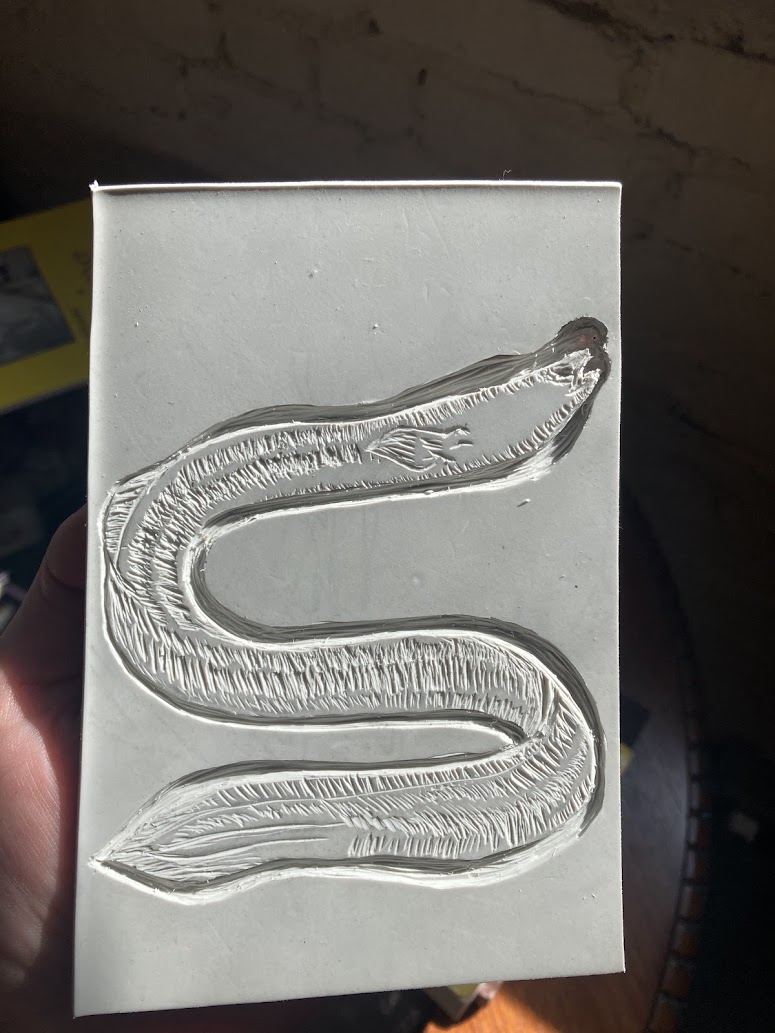 |
| Please upload a JPG or PNG of a picture of you that we can use in the show. We prefer a headshot or something that clearly shows your face. Please make sure it’s high enough resolution for print. | 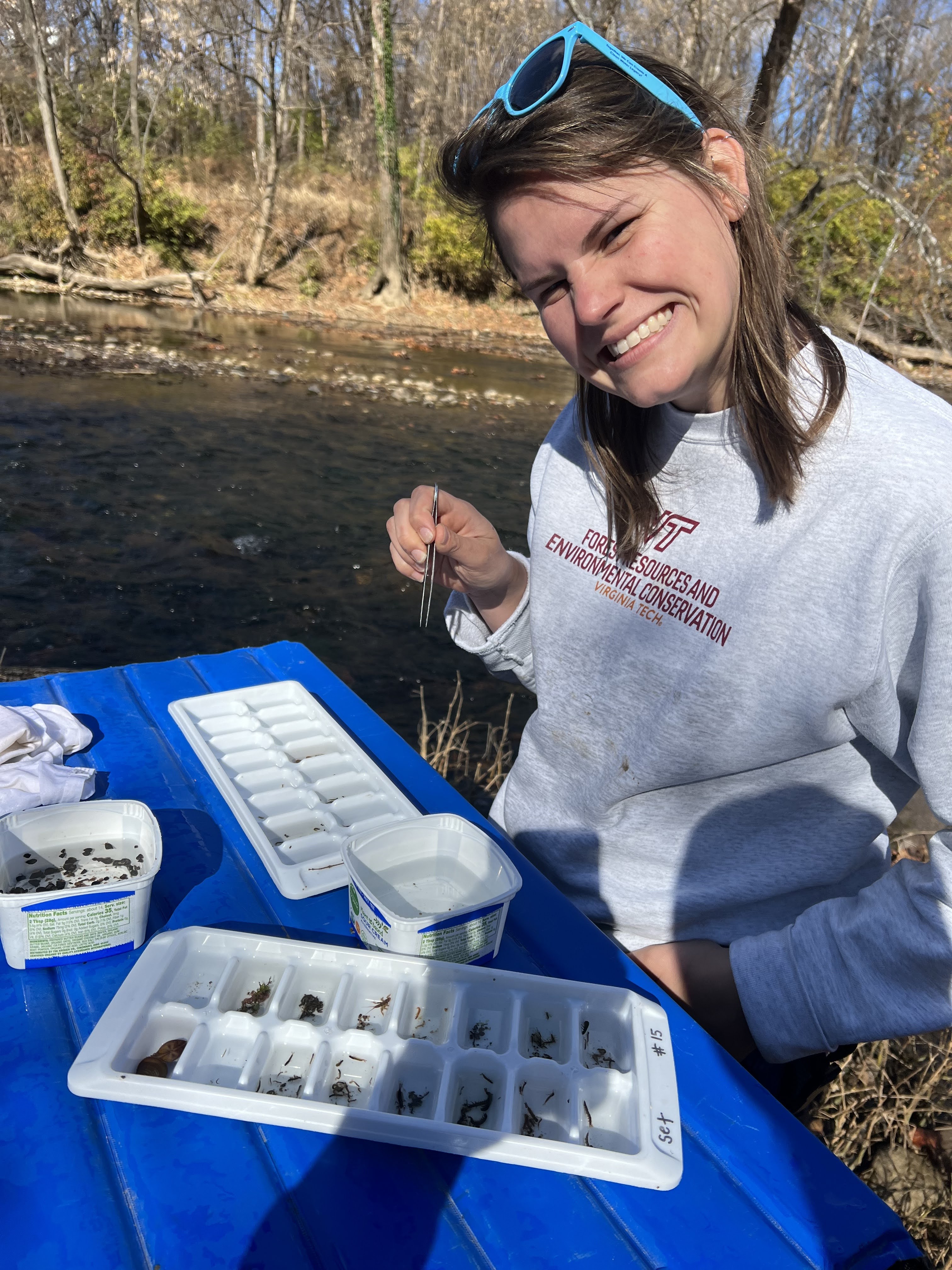 |
| May we potentially use your work in progress image as part of promotional activities? | Yes, please do. |
| Describe the work including planned media, size and presentation format. (All art forms are accepted for this call, but there must be a physical representation of the work ready for display. Most often this is a framed and ready-to-hang two dimensional image.) | The art piece will depict a frog (with a halo), giant water bug, and a Slurpee. The planned media is linocut (linoleum print). The finished work will consist of either one large print (24×36 or slightly smaller, 18×24) or a series of 2-3 smaller prints (each 8×10), as I have not decided if the three subjects will appear together on the same print (“poster”) or if there should be three separate smaller prints, one per subject. The giant water bug, frog, and Slurpee cup/straw will be printed in black & white, and the frog’s halo and Slurpee liquid will be printed in a yellowish gold color. The print(s) will be framed and possibly matted depending on the size. I think this work may require a description or artist statement (?) |
| Describe your contemplative practice in relation to the work so far. | In creating Tinker Slurpee, a linocut print depicting the giant water bug feeding on the frog – and image lifted directly from the first chapter of Pilgrim at Tinker Creek – I’ve returned to this moment not just as a biologist, but as a contemplative observer and artist. Linocut, with its brutal physicality – carving, gouging, reversing, inking – feels like the right medium for this subject. This piece is both scientific and symbolic. As an aquatic biologist, I know the species, the feeding behavior, the anatomy. But as an artist and reader of Pilgrim at Tinker Creek, I’m reaching towards something more unsettling: the ecological truth that beauty and horror are intertwined. |
| Describe your engagement with nature in relation to this work so far. | As a water quality monitoring specialist and aquatic biologist, I spend much of my life immersed in places that most people overlook – streams, ditches, underneath bridge crossings, swamps, the slow churn of life at the edge of water. My scientific work demands precision, attention, and patience. It feels almost ritualistic to be observing things so closely and intimately. I’ve been thinking about how to arrange the organisms and depict their anatomy so that they come across as recognizable. Everyone knows what a frog looks like, but it’s been difficult to figure out how best to design the water bug’s appearance to make it identifiable. I have found myself revisiting my insect guide and identification books, observing diagrams and reading diagnostic characteristics and life history traits. I learned in one of the texts that they are sometimes attracted to lights at dark, and it is the male, not the female, who carries the egg sac on his back and guards it! Sometimes I feel my experience in the field mirrors Annie’s: the tension between knowing and not-knowing, between hypothesis and analysis. |
| Describe your engagement with the text in relation to this work so far. | I really enjoyed revisiting Dillard’s first chapter, where the frog deflates like a “kicked tent”. It is unforgettable and iconic scene, and my goal was to give it powerful visual life, especially during the 50+ year celebration of the text. The incorporation of the Slurpee is both horrific and absurd, just like the moment itself. |
| What questions, or primary question, have arisen for you in pursuing the work so far? | Is this too grotesque? Are people going to “get it”/ the reference? If people haven’t read the book, are they going to understand what is going on here? Is it contradictory to the book’s central themes to “memorialize” or honor the frog in this way? |
| What have you learned in the process so far? | Printmaking is an entirely new medium for me, so linocut has been a little intimidating to learn. I feel very fortunate to live in an apartment complex on the banks of the Roanoke River, where I have many creative and active neighbors. Two of these neighbors hosted a linocut workshop in the lobby of our building, where we were asked to bring $10 to cover supplies, and come prepared with a concept to carve within a two-hour period. In typical fashion, I chose a too-complicated design to be completed in the allotted time. I chose the American Eel for my first ever design, which I traced from an image using tracing paper. I transferred the graphite from the tracing paper by rubbing directly onto the linoleum block and then began carving out the “negative” spaces. Because I did not finish during the scheduled time but really enjoyed the process, I decided to purchase some Speedball linoleum blocks and beginners carving tools of my own. When they arrived, I worked on finishing carving up the Eel which I will be printing onto printmaking paper for the first time this Friday, 9/12 after I return from a work travel trip. At the time that this progress report is currently due, I am traveling with my full-time job performing field work and am away from my linocut and carving supplies. For this reason, I am attaching a photo of the linocut Eel in place of my photo in progress currently! |
| If applicable, please describe any challenges that will prevent you from participating in the effort or completing the project on time. | N/A |
| REQUIRED: Please add a PDF of your vendor’s invoice here. The payer is “City of Roanoke, Attention Douglas Jackson.” This invoice is required and may be generated from your accounting system or manually created. The invoice must be numbered and all information must match what you have entered in Oracle. | Pence_Invoice_Tinker_09202501.pdf |
| Invoice Number | 09202501 |
| My typed name stands for my signature. I have identified all technology used in the creation of this work in the description of my process above. | Rachel Pence |
| Staff use only | DCJ – Okay to pay |
| Staff Use Only: Melissa Tracking | Paid ACH 10/18/2025 |
•
•