| In Oracle, Ready to Pay | YES! |
|---|---|
| Name | Donna Cooper |
| Phone | 8433646670 |
| Email hidden; Javascript is required. | |
| Name of Work (TBD or Untitled are okay) | TBD |
| Please upload a JPG of your work in progress | 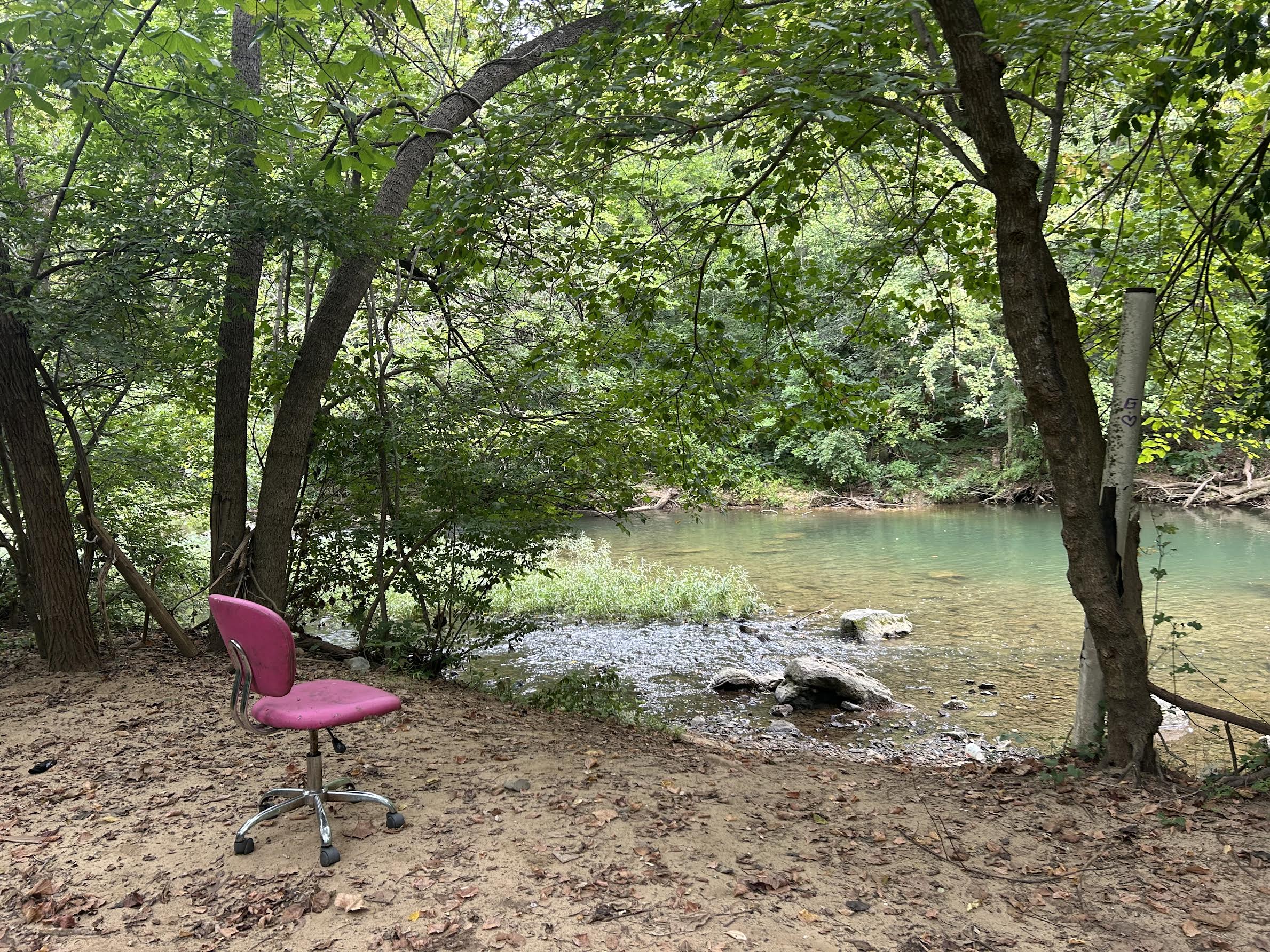 |
| Please upload a JPG or PNG of a picture of you that we can use in the show. We prefer a headshot or something that clearly shows your face. Please make sure it’s high enough resolution for print. |  |
| May we potentially use your work in progress image as part of promotional activities? | Yes, please do. |
| Describe the work including planned media, size and presentation format. (All art forms are accepted for this call, but there must be a physical representation of the work ready for display. Most often this is a framed and ready-to-hang two dimensional image.) | The work is not finished, but will be framed. It will probably be a diptych or triptych format, featuring photography and/or drawing. |
| Describe your contemplative practice in relation to the work so far. | My contemplative practice with this project has been about learning to stay with what is uncomfortable. When I first started walking along the creek and thinking about the project- I thought on would focus on the beauty of the place- light coming through the trees, the sound of the water, the wildlife I saw, BUT what kept presenting itself to me over and over were the less celebrated realities: trash left behind, the smell of cigarettes and urine, and signs of people, homeless or otherwise, who use the creek side in ways that seem to disregard it. Rather than turning from this and ignoring it. I’ve tried to let my practice be one of noticing without judgment—of holding space for what is unsightly and inconvenient. This has not been easy, it would have been easier to frame the work around flora and fauna and I may still switch to that, but as of not I am not romanticizing. My job as an artist is to attend to my observations and be present with what I am seeing. In sitting with my visits to the creek, (usually off the Greenway), I have to look at the unsightly encounters as not a failure of the creek but as part of its ongoing life- traces of human impact inter woven with the natural rhythms. My practice is about listening to that tension, acknowledging the disconnection, and asking how we might relearn a way of belonging that honors rather than diminishes the place. |
| Describe your engagement with nature in relation to this work so far. | My engagement with nature in this project has meant letting the creek reveal itself on its own terms. I came expecting to encounter the beauty of the place—the water moving, the plants, the birdlife— and that is there, but what has stayed with me most strongly are the human traces: trash scattered along the bank, bottles, cigarettes. These are not the images we usually associate with “nature,” yet they are part of the truth of this creek for right now. We are not separate from nature, yet many humans fail to see the connection and how we are one. Tinker Creek carries the imprint of our presence, our neglect, and our disconnection. By engaging with what is difficult, I begin to see the creek more fully—not just as a backdrop of beauty but as a place that bears witness to how we live. This work is teaching me that engaging with nature is not always about celebrating its purity. Sometimes it means acknowledging how entangled we are, how our choices show up in the land and water, and asking what it would mean to live differently. |
| Describe your engagement with the text in relation to this work so far. | What strikes me in Annie Dillard’s Pilgrim at Tinker Creek is the way she refuses to separate brutality from beauty. She lingers over an insect being devoured just as intently as she does the stillness of a pond. That tension in her observations has shaped how I approach my own work for this project. When I walk along the creek, I find a similar unease—not in insects or predators, but in the human presence that shows up as trash, urine smells, or makeshift traces of habitation. These marks are uncomfortable, yet they are as much a part of the creek as the plants, birds, and flowing water. Dillard reminds me that to really see a place means not editing out what unsettles me. My engagement with her text has encouraged me to let the creek reveal itself fully, to sit with the harsh and the serene side by side. That practice of attention is what I am carrying into this work. |
| What questions, or primary question, have arisen for you in pursuing the work so far? | Upstream, I watched three deer step into the water – they were perfectly at home. I saw this on two different days at the same spot. Not far from that same area, I photographed an office chair sitting empty by the creek. That juxtaposition keeps pressing on me. It asks what it really means to be in relationship with a creek that holds both the beauty of wildlife and the weight of our discard. From there, more questions follow: What is my responsibility as an artist—simply to witness, or to invite a kind of attention that could shift how we see and care for this place? How do I show both the beauty and the mess without sensationalizing either? And practically, how do I compose images that tell the truth without turning the creek into a symbol for only one side of the story? |
| What have you learned in the process so far? | I’ve learned that Tinker Creek is full of contradictions that aren’t always easy to hold. On the same day I can see deer drinking at the waters the water’s edge, and a red chair with trash near the same spot. That mix has been discouraging and, at times, sad. It reminds me how much human neglect shows up in the natural world. But I’ve also learned that if I stay with it—without looking away—there is still hope. The creek keeps moving, the deer return, the plants grow back. The human neglect and the beauty exist together, and that tension is what makes the place honest. So, the lesson for me is that paying attention to the creek means accepting the full story: what is broken, what is resilient, and the possibility that by seeing more clearly, we might begin to care and respect the creek, and all our waterways and oceans. |
| If applicable, please describe any challenges that will prevent you from participating in the effort or completing the project on time. | N/A |
| REQUIRED: Please add a PDF of your vendor’s invoice here. The payer is “City of Roanoke, Attention Douglas Jackson.” This invoice is required and may be generated from your accounting system or manually created. The invoice must be numbered and all information must match what you have entered in Oracle. | Invoice-to-Roanoke-City.pdf |
| Invoice Number | 108 |
| My typed name stands for my signature. I have identified all technology used in the creation of this work in the description of my process above. | Donna Cooper |
| Staff use only | DCJ – NOTE Donna Cooper Hurt in oracle- 8568 |
| Staff Use Only: Melissa Tracking | Paid ACH 10/9/2025 |
•
•