| Name | Megan Scripps |
|---|---|
| Phone | 5405568384 |
| Email hidden; Javascript is required. | |
| Name of Work | “Pilgrim in Blue” |
| Please upload a JPG of your COMPLETED work. | 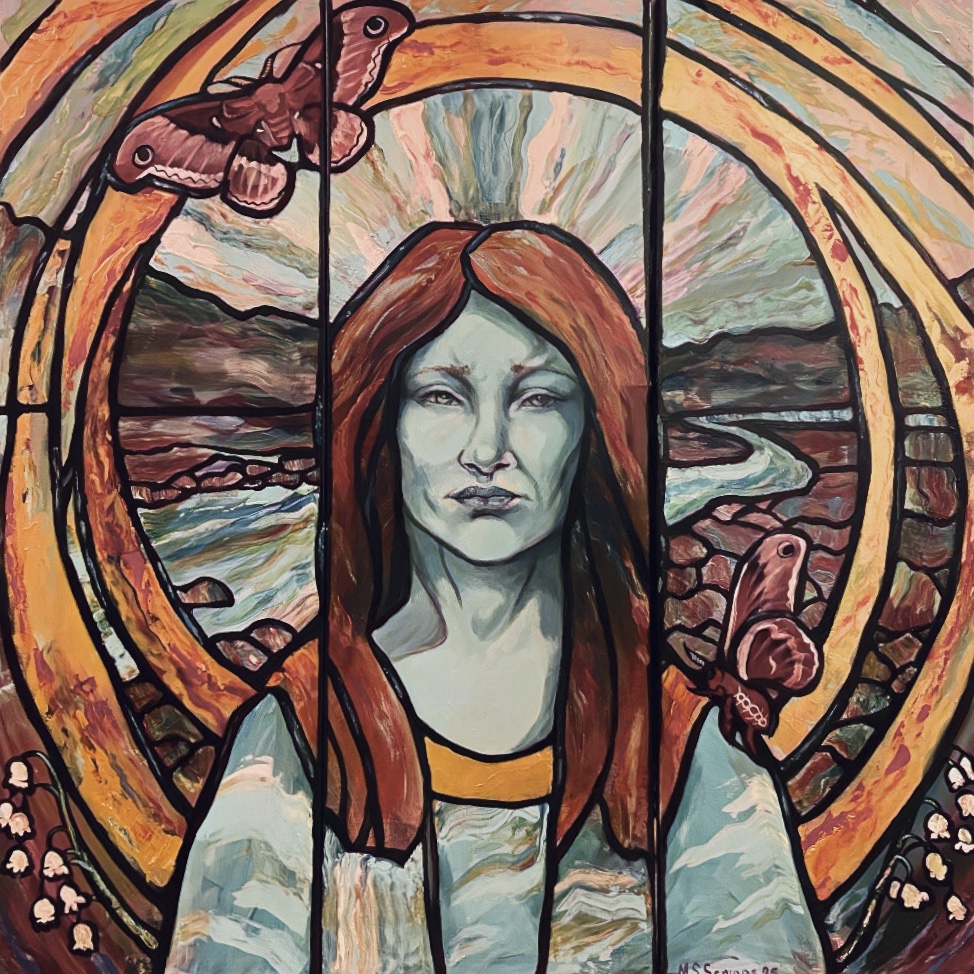 |
| We’ve already asked you for an artist’s image. We’ll use that unless you upload a new one here. |  |
| Describe the completed work, including media, size and presentation format. (All art forms are accepted for this call, but there must be a physical representation of the work ready for display. Most often this is a framed and ready-to-hang two dimensional image.) | Ready to display and finished drying, heavy bodies acrylics on 3 separate canvas panels. Roughly 30×30 |
| Please reflect on how your contemplative practice informed or helped shape the work. | My painting, “Pilgrim in Blue” was Inspired by the book: Annie Dillard’s Pilgrim at Tinker Creek. This painting reflects on the inevitability of sorrow and pain as part of the human condition. The blue figure embodies sadness, while the Prometheus moths symbolize both fragility and suffering(as mentioned in the book). Dillard found the pain and struggle a moth had endured, due to human interference, a cruelty inflicted by an impartial God. Which lead her to question her faith in divine benevolence. I find it particularly interesting and ironic after some research that Prometheus in mythology stole fire from Zeus and was punished with eternal torment for his transgression. At the base of the painting I added in lily of the valley, which in Christian tradition is known as “our ladies tears” believed to have bloomed from the Virgin Mary’s tears at the foot of the cross. Further tying together the theme of religion and the inevitable sadness we all will experience in our lifetime. |
| Please reflect on how your deeper exploration of nature informed or helped shape the work. | I am always noticing little details about the natural world and storing them, the play of light on the tops of trees, for instance when the leaves turn over for rain the cool green creates a deeper contrast than leaves normally do against the sky, like wet rocks are so much darker than dry ones, how they are more colorful when wet. I store these these “notes” in a mental diary for future use. And in this particular case I found that the gold tones of a sycamore tree bark against a clear turquoise sky made an absolutely beautiful color combination and I wanted it to be the main color combination for this painting. |
| Please reflect on how your engagement with the text of PILGRIM AT TINKER CREEK informed or helped shape the work. | While hiking the area of tinkers creek and cliffs my family and I found a very sick Eastern box turtle. We brought it to a wildlife rehabilitation clinic and they told us he had a really bad sinus infection that was common in this type of turtle, most likely caused by a lack of vitamin A. He had obviously lived many years, and had plenty of battle scars to prove it. To think that it might not have survived the winter over something as small as a vitamin deficiency, really made me think. The incident made me see Dillards point more clearly, that life is fragile as it is beautiful. And while I personally believe God exists, we are not always protected from a harsh and sometimes painful world. I can only hope that truth may be part of a larger plan for our eventual benefit and enjoy the beauty of life while I can. |
| What questions has this work prompted you to explore next? | Where did Annie specifically grow up, I’d love to see the actual source of inspiration. What would it had been like to be a fly on the wall so to speak and see this young woman trudging through the undergrowth eagerly gobbling up the little details of the natural world around her. I know what it’s like to get painterly inspiration but to paint with words like she does is something I wish I could see in person. |
| What did you learn in the process? | How much I enjoy reading about the same things that inspire me to paint, it’s literally like walking in the woods. Normally when I take the time to read it’s documentary type of works, health related, autism related (because of my children) but I really should read more like this book by Annie Dillard. She uses the words that I can relate to and am always trying to convey with paint. |
| This is an original work and I have identified all technology used in the creation of this work in the description of my process above. My typed name stands for my signature. | Megan Scripps |
•
•