| Name | Donna Cooper |
|---|---|
| Phone | 843-364-6670 |
| Email hidden; Javascript is required. | |
| Name of Work | Tinker Creek Reflections, VA |
| Please upload a JPG of your COMPLETED work. | 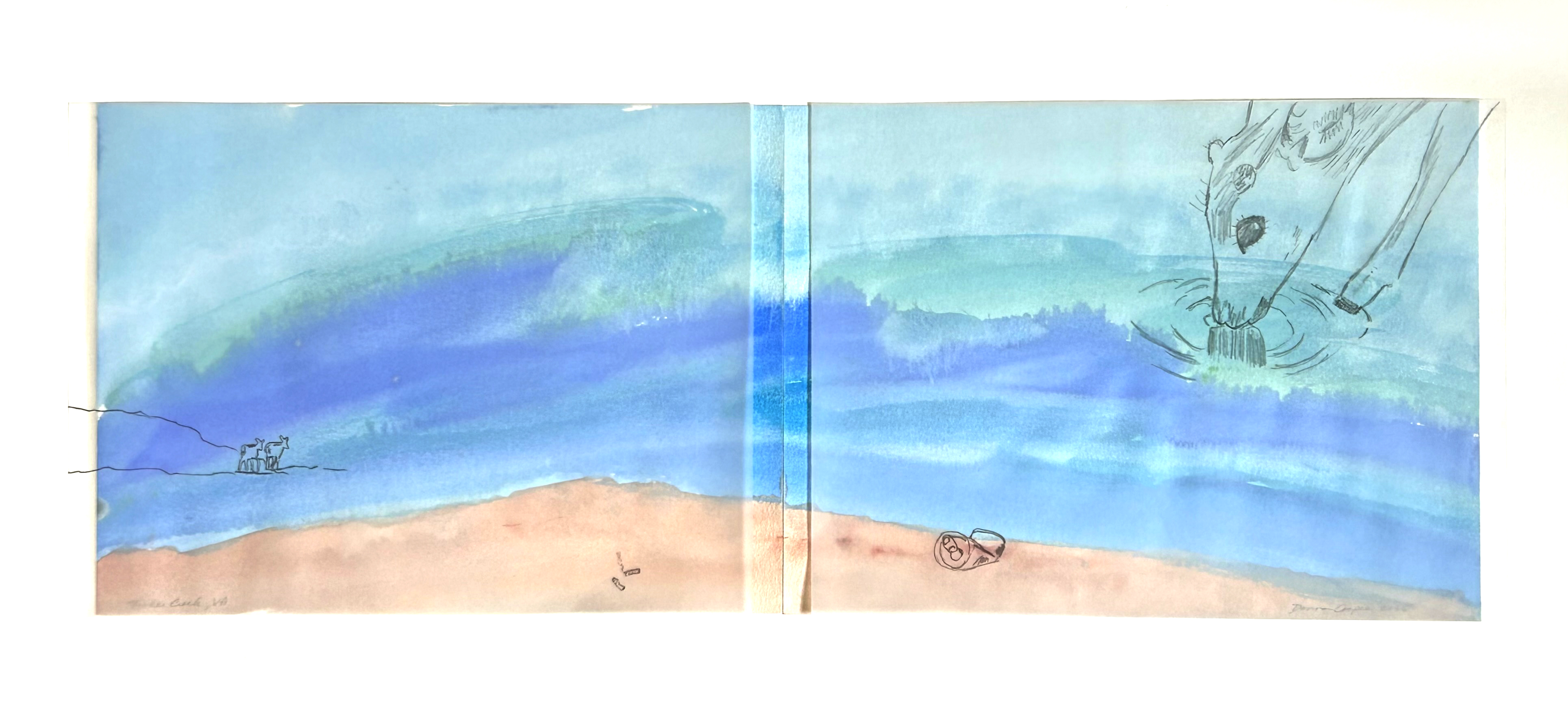 |
| Describe the completed work, including media, size and presentation format. (All art forms are accepted for this call, but there must be a physical representation of the work ready for display. Most often this is a framed and ready-to-hang two dimensional image.) | Finished piece: Gouache painting with vellum and graphite sketches on top. Diptych format. Size framed: 16×30″ |
| Please reflect on how your contemplative practice informed or helped shape the work. | My contemplative practice comes from spending time at Tinker Creek- sitting, walking, and paying attention to what’s around me. I find the act of awareness which includes listening and watching becomes a form of collaboration with the land and the creek. I began to notice smaller shifts – things like light on the surface of the creek- how the color of the water would change depending on the time of day or the type of clouds in the sky. What types of human and animal signs are left at the creekside? Many of my encounters became a discipline of seeing without controlling, of allowing the place to reveal its own patterns and contradictions. Sometimes I left after visiting feeling upset about trash or human smells like cigarette smoke lingering at the water’s edge. These visits shaped how I approached the art project. Using gouache and pencil became a way to stay in that state of attention — translating what I observed through the slow process of making marks. The practice taught me that observation itself can be an act of respect, even when what I notice is uncomfortable or imperfect. |
| Please reflect on how your deeper exploration of nature informed or helped shape the work. | Initially I was concerned with how my visits to the creek would present themselves in an art piece. Some of what I found there in my first visits bothered me—trash, graffiti, and the lingering smell of urine—but other moments offered balance. I began to notice a spot where deer came to drink, returning again and again. Watching the deer helped me see the creek as a living system that holds both human disruption and animal life. That deeper observation shifted my approach: instead of trying to make the creek appear only beautiful in some romantic pristine condition- I began to work with its full complexity, allowing both the troubling and the tender to shape the work. |
| Please reflect on how your engagement with the text of PILGRIM AT TINKER CREEK informed or helped shape the work. | Annie Dillards writing was something I returned to a lot during my observational process at the creek. How would I as a visual artist represent the creek? Like Annie, I encountered a lot of beauty- the babbling sounds of the water passing by the rocks. The rock formations themselves. The birds and animals feeding or drinking from the water – all balanced out the disrespectful human presence I encountered at the creeks edge. Annie spoke of the presence of humans in the landscape, she noticed beer cans and debris for example. Dillard gives reminders that the natural world she is writing about isn’t untouched wilderness but a living place shaped by beauty and damage. In the end, my work centered on accepting the contradictions that flow through and by the creek itself—the meeting of beauty and disturbance, presence and neglect. It’s all part of the whole observational process. |
| What questions has this work prompted you to explore next? | This project has made me think more about pollution in our waterways—how what we leave behind moves through the same systems that give us life. It has made me want to look for ways art can do more than just reflect the problem. I’m interested in working with others on community clean-ups, workshops, or small projects that bring attention to the health of the creek, and ultimately the Roanoke River. I want to find ways for art to help people see the creek, the river, the land as something we’re all connected to and responsible for. |
| What did you learn in the process? | Through deepening into the process of returning to the creek again and again-I learned to embrace what the place offered rather than what I expected to find. The act of returning became a form of relationship — one built on patience, observation, and trust. Some days I found peace and sunny light, others were marked by trash and decay, but the flow of the creek taught me-it became a teacher. I leaned that beauty isn’t about perfection, it’s about presence, resilience and the way all things coexist within a common current. |
| This is an original work and I have identified all technology used in the creation of this work in the description of my process above. My typed name stands for my signature. | Donna Cooper |
•
•