| Name | Stefanie Sarine |
|---|---|
| Phone | 7179685872 |
| Email hidden; Javascript is required. | |
| Name of Work | The Keeper |
| Please upload a JPG of your COMPLETED work. | 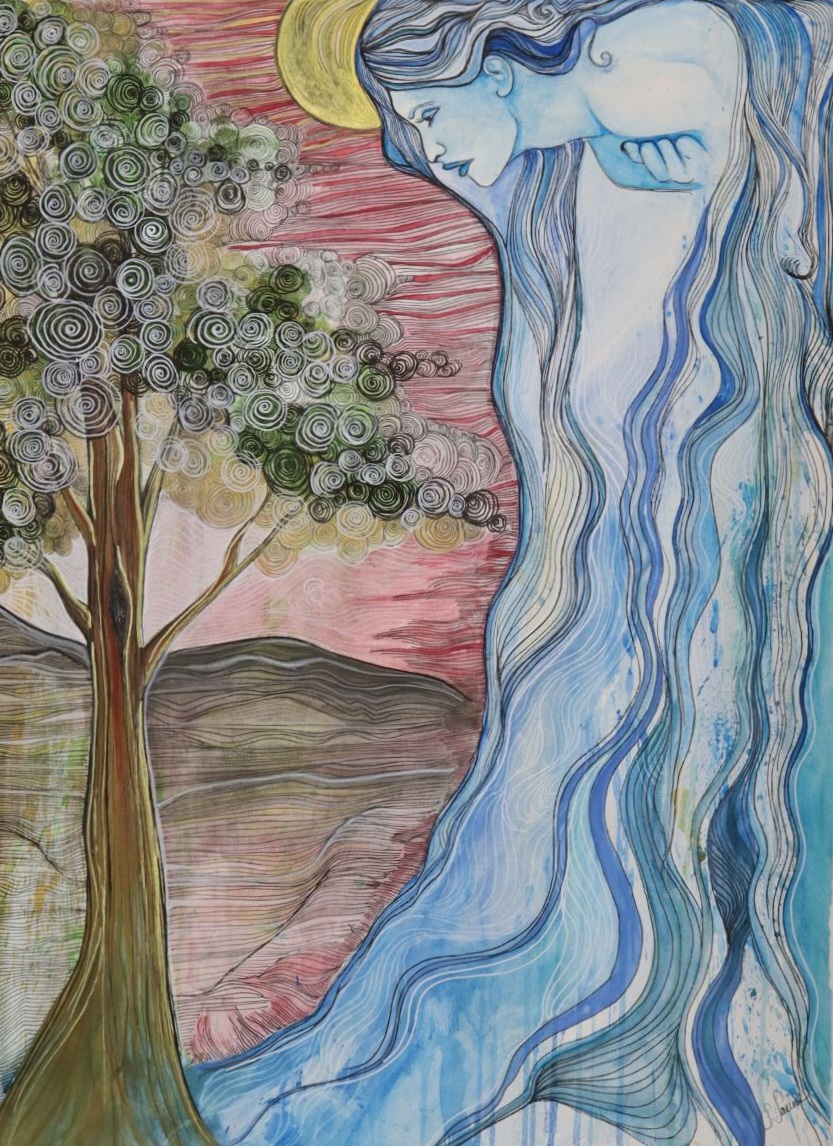 |
| Describe the completed work, including media, size and presentation format. (All art forms are accepted for this call, but there must be a physical representation of the work ready for display. Most often this is a framed and ready-to-hang two dimensional image.) | The Keeper is a 18×24 watercolor/mixed-media painting. The painting is framed in a black vertical frame, with professional antiglare glass. The Keeper depicts an ethereal woman that is part guardian, part goddess, who presides over the water sources of nature. She is not a passive figure, but a force of both destruction and renewal. Her force of water becomes more than a natural element: it is power, memory, and transformation. The red hues in the sky represent the cruelty and unforgiving nature of the wild, an acknowledgment that nature, while beautiful, is indifferent to human softness. Yet from this harshness flows something essential: water, released from her body, becomes a gesture of cleansing and hope. It nourishes the land below and offers the possibility of life, growth, and renewal. Through a balance of fluid watercolor and deliberate pen and ink, this piece explores the tension between chaos and control, harshness and healing. The Keeper stands as a symbol of nature’s dual roles, both the destroyer and giver of life. |
| Please reflect on how your contemplative practice informed or helped shape the work. | Contemplative Practice Behind The Keeper Creating The Keeper began with a deep reflection on nature’s power—both its quiet grace and its unforgiving force. I started with loose watercolor washes to build the emotional atmosphere of the piece, allowing the fluidity of the medium to echo the movement of water and the unpredictability of nature itself. The red sky was added intentionally to suggest intensity and unease, grounding the work in the theme of nature’s cruelty. Once the watercolor base dried, I used pen and ink to define the figure of the keeper—a goddess-like woman who embodies both destruction and renewal. The pen work brought structure and intention to the softness of the watercolor, representing the balance between chaos and control in the natural world. Throughout the process, I moved between intuitive mark-making and deliberate detail, letting the materials guide the emotional tone while staying rooted in the symbolism of water, sky, and the sacred feminine. The final composition is the result of this dialogue between fluid exploration and focused refinement. |
| Please reflect on how your deeper exploration of nature informed or helped shape the work. | While creating The Keeper, I came to realize that my connection to nature has often been shaped more by its harshness than its peace. I’ve struggled to relate to nature as something purely serene or gentle—instead, it’s the violence, the chaos, and the indifference that have always felt more honest to me. This painting became a space to explore that tension. |
| Please reflect on how your engagement with the text of PILGRIM AT TINKER CREEK informed or helped shape the work. | Both The Keeper and Annie Dillard’s Pilgrim at Tinker Creek explore the dual nature of the natural world—its beauty and its brutality. In The Keeper, the goddess-like figure controls the water, representing both destruction and renewal. Similarly, Dillard observes how nature can be both awe-inspiring and cruel, often shifting between serene landscapes and violent acts. The red sky in The Keeper mirrors Dillard’s reflections on nature’s indifference, while the flowing water symbolizes cleansing and hope—just as Dillard often finds moments of grace amid nature’s harshness. Both works ultimately embrace the complexity of the natural world, portraying it not as good or evil, but as something powerful, sacred, and deeply real. |
| What questions has this work prompted you to explore next? | Through the cruel yet forgiving ways of nature, I have learned that growth often comes wrapped in discomfort and challenge. The unpredictability and harshness of the natural world have mirrored my own inner struggles, teaching me not to retreat when things become difficult but to face them with courage and curiosity. Instead of running from fear, I’ve begun to explore it — to sit with it and understand what it reveals about me. This process has deeply influenced my art, pushing me to create work that confronts vulnerability and breaks down the walls I once built for protection. In transforming that raw, untamed energy into creative expression, I’ve found not only resilience but also a profound sense of freedom and self-discovery. How can my art become a safe space to explore fear and vulnerability? What barriers still exist in my creative practice, and how can I begin to dismantle them? How does confronting discomfort influence the authenticity or depth of my work? Is struggle a necessary part of transformation, or can growth happen through gentleness too? What would it mean to truly embrace discomfort as a teacher rather than an enemy? Hmmm… |
| What did you learn in the process? | Through the process, I learned that acknowledging the cruelty in nature doesn’t mean disconnecting from it—it can actually be a form of deep engagement. By expressing nature’s darker aspects through color, form, and symbolism, I began to find a strange kind of peace within that honesty. It taught me that beauty in nature isn’t always soft or comforting—sometimes, it’s in the raw, unforgiving power that makes nature so intriguing. |
| This is an original work and I have identified all technology used in the creation of this work in the description of my process above. My typed name stands for my signature. | Stefanie Sarine |
•
•